0 cooks. 85 guests. 4 days. The kitchen has no staffing problem.
Why standardisation is the most important structural lever against the skills crisis – and why our own kitchen resisted it for six months.
How many cooks a kitchen needs depends less on the labour market than on its processes. In our Line Kitchen, a kitchen assistant and I served 85 guests a four-course menu for four days – because pre-production and plate finishing are standardised.
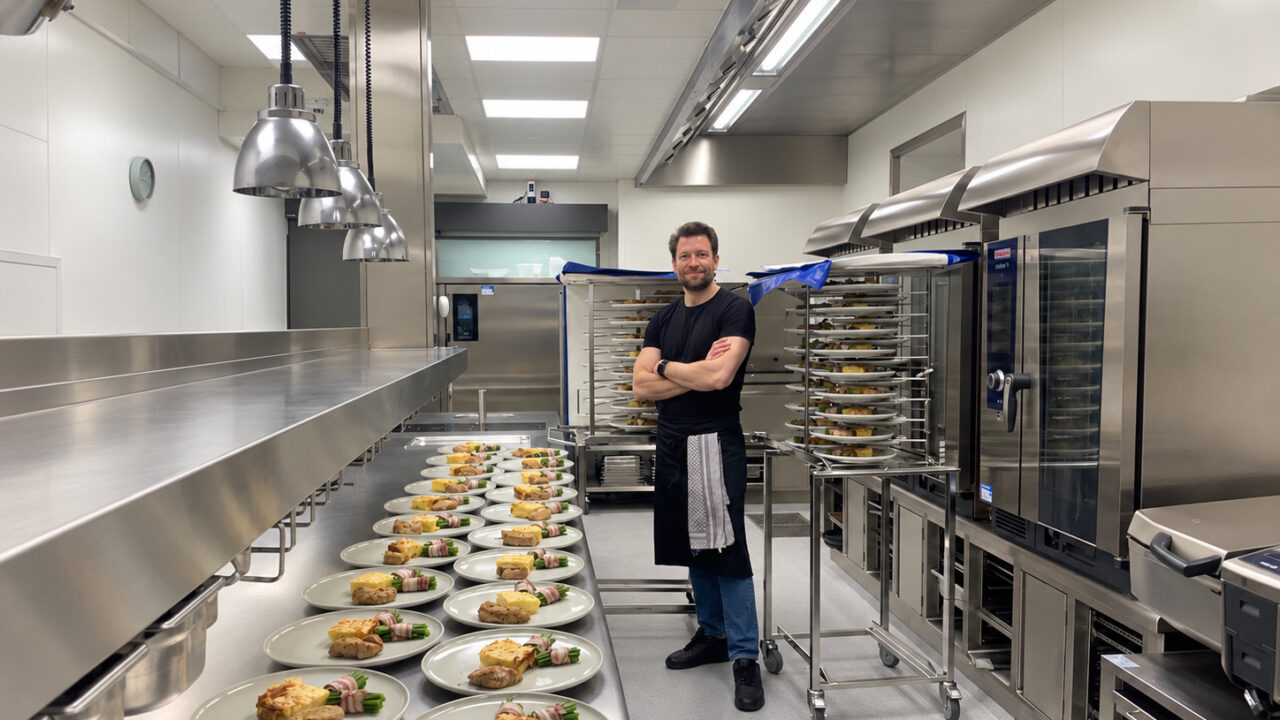
Four days. 85 guests per evening. Four courses. A kitchen assistant at my side. Not a single trained cook. And me – the hotelier who had never stood at a piece of professional kitchen equipment before. A challenge, to put it mildly.
Anyone who works in hospitality knows: that is considered impossible.
It was not impossible. But the really interesting part is not that it worked. It is what had happened beforehand – and how my staff reacted afterwards.
What everyone talks about – and nobody solves
The finding has been stable for years. Over 50,000 job advertisements in Austria's hotel and catering industry (Stepstone Fachkräfteatlas 2023). The 2025 AMS list of shortage occupations names almost all core tourism occupations as shortage occupations. Almost 45 per cent of trainee restaurant staff drop out of their apprenticeship. Two thirds of hotel businesses report that their core staff carry the gaps – and thus become a risk factor themselves.
The industry's answers have been the same for ten years: higher wages, international recruitment, employer branding, image campaigns. All legitimate. All expensive. All not enough.
And all of them overlook the same point: we are solving a problem we do not actually have.
What had happened beforehand
What worked in those four days was not improvisation. It was a system backed by a year of planning, three months of building and half a year of settling in.
My brother had taken me along to show me a Line Kitchen live. I was sceptical. After twenty minutes I was convinced. A year of planning and intensive work on the pitfalls of kitchen design. Three months of construction. Then we cleared out all the legacy problems in our own premises – right down to the floor slab, so that the new kitchen would be step-free and ergonomic. Routes were measured. Movements planned. Processes thought through backwards from service. The head chef was brought in early, and the internal sign-off secured.
With Benedikt Zangerle, who accompanied us from the start, we worked on the concept until the very end and made it ready for production. His input was decisive for the implementation.
What we had underestimated: our own cooks' resistance to changing old habits once the kitchen was in place.
The build was finished in three months. The minds needed half a year. “I freeze” versus “we blast-freeze” was not a technical dispute – it was a cultural one. Blast-freezing is not “a faster freezer”. It is a different process, with different rules and different output. Until that was out of people's heads, it took more conversations than I had expected.
The coincidence that made the system visible
Then the holiday season came.
A tour group had been overlooked on the booking list. The head chef had long since booked his holiday. The sous chef had to look after his children during the school holidays. There was no choice left. The system had to take over. Eyes widened and looks were incredulous when I said straight away: I'll do it. Do you know the awkward silence after a confession like that? Exactly that.
Even so, the team was fantastic. The kitchen team had pre-produced everything that could be pre-produced. On the morning of service, I assembled the main courses cold on the plates and sorted them into the plate trolleys – the system is designed for plate finishing: prepare cold, regenerate later. An hour before service began, the cold starters were plated. The salad dressing went on ten minutes before service, not a minute earlier. During service itself we regenerated the components and added the sauces.
You learn things this way that appear in no textbook. They emerge on the third day, when you watch again the movement you made on the first day.
What the team said afterwards
What surprised me was not that it worked. It was what the staff said afterwards.
Across the board, everyone had expected me to go down with flags flying. Instead they said: “It was the first time it was really calm in the kitchen.” The waiters hardly had to wait at the pass. There was no backlog of dishes. Service ran evenly, without the usual wave of stress. The relief could be felt throughout the team.
That is the real punchline.
Not that a beginner can manage 85 guests. But that the same team, in the same kitchen, experienced calm for the first time – when things were no longer improvised but executed. Our head chef has been with us for 15 years. He no longer has to worry about being the only one who can do the work. The pressure on him falls, the flexibility in the team rises.
The principle behind it is 70 years old
The logic behind the Line Kitchen is not new. It derives from the lean thinking of the Toyota Production System – the same logic with which Toyota has been systematically eliminating waste since the 1950s. In food production this goes by 5S or 6S: sorting, systematising, cleaning, standardising, self-discipline, safety.
What standardisation actually does in a kitchen: it lowers the mental load. It makes staffing needs plannable. It makes training times measurable. And for a large share of the tasks, it makes the difference between a trained cook and a kitchen assistant irrelevant.
The objection that must be taken seriously
Anyone who says this out loud immediately hears the same reproach: standardisation kills creativity. Young cooks want to create, not execute.
The objection is right – and misses the point.
A kitchen that only executes eventually withers. But creativity does not arise in a chaotic kitchen anyway. Anyone who has to improvise three times an hour during service because the preparation does not hold has no creative energy left – they have residual stress. Standards do not eliminate creativity. They create the space in which it can arise in the first place.
What this means for hoteliers in practice
Anyone about to advertise a position should first answer two questions honestly.
First: which tasks in my kitchen are genuinely tied to a trained cook – and which only historically?
Second: if I lose half my team tomorrow, which process can withstand that?
If the answer to the second question is “none”, that is not a staffing problem. That is a design flaw.
The industry likes to treat staff shortages as a force of nature. That is convenient, because it externalises all operational responsibility. But it is wrong – and it has a price: where core staff permanently carry the gaps, exhaustion becomes the normal state.
Without systematisation and standardisation, this simply will not be possible in most kitchens any more. Well-thought-out kitchen logistics are not an option here but a prerequisite – they decide whether a business with fewer staff can still function reliably at all.
I want to make one thing clear at this point: it would be a mistake to think that cooks are no longer needed. No, absolutely not. Skilled professionals are needed – but where their knowledge and experience actually count: in the creativity that standardisation makes possible again, in preparing the components, in quality assurance. The system itself, the kitchen planning and the logistics behind it, is a discipline in its own right and lies in other hands – in our case with TB Planquadrat, who developed the “Line Kitchen Solutions” system in cooperation with Benedikt Zangerle of Küchenconsulting Zangerle.
The real key to this is coaching. A system on paper achieves nothing if nobody carries it into the team. Standards only work when someone demonstrates them, explains them and accompanies them until they become routine. As in any good team, tasks are shared out and the pressure on the individual falls.
The need for staff is a function of process design. Change the system and you change the equation.
Four days, 85 guests, a kitchen assistant and a hotelier with no professional kitchen experience were not proof that you can manage without cooks. They were proof that most kitchens manage the wrong bottleneck – and that systems you have to defend against your own kitchen for six months end up proving themselves.
Sources
The figures in the section “What everyone talks about – and nobody solves” and the background on the Line Kitchen are based on the following sources.
Over 50,000 job advertisements in Austria's hotel and catering industry:
StepStone Österreich. (n.d.). Fachkräftemangel in Österreich – Zahlen, Daten, Fakten – ein Überblick. Retrieved 4 October 2026, from https://stepstone.at/e-recruiting/blog/fachkraeftemangel-oesterreich
Core tourism occupations on the 2025 shortage occupations list:
Bundesministerium für Arbeit und Wirtschaft. (2024). Fachkräfteverordnung 2025 (BGBl. II Nr. 421/2024). https://www.ris.bka.gv.at/Dokumente/BgblAuth/BGBLA_2024_II_421/BGBLA_2024_II_421.html
Almost 45 per cent apprenticeship dropout among trainee restaurant staff:
AHGZ. (n.d.). Die Krise der Lehre anpacken. Retrieved 4 October 2026, from https://www.ahgz.at/gastro-und-gv/news/die-krise-der-lehre-anpacken-67849
Arbeitsmarktservice Österreich. (n.d.). Restaurantfachmann/-frau. AMS Berufslexikon. Retrieved 4 October 2026, from https://www.berufslexikon.at/berufe/172-Restaurantfachmann~Restaurantfachfrau/
Lean thinking and the Toyota Production System (“The principle behind it is 70 years old”):
Ohno, T. (1988). Toyota production system: Beyond large-scale production. Productivity Press.
Contact
About the author:
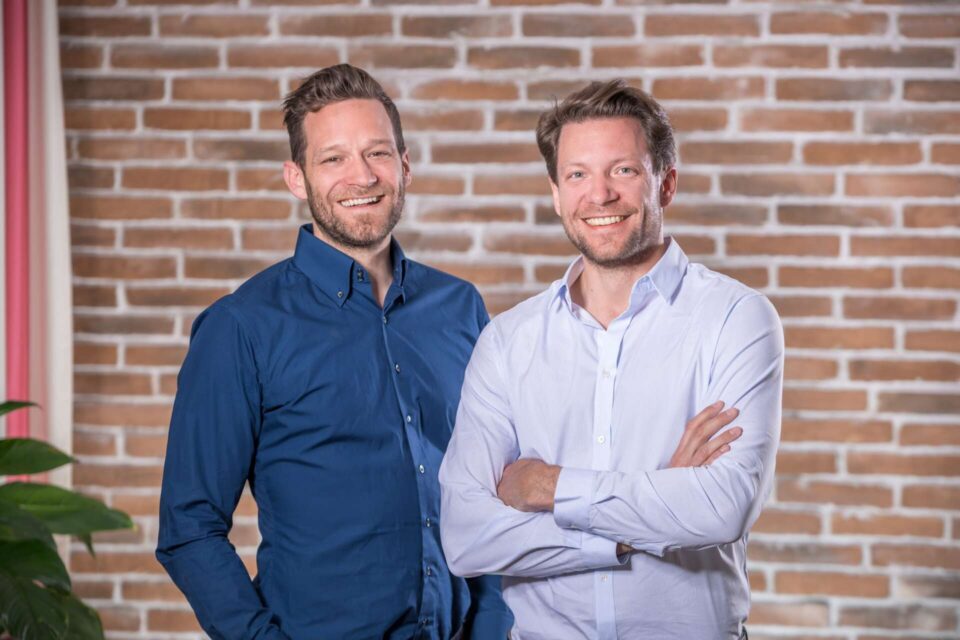
Michael Ploberger runs Hotel Ploberger in Wels, a seminar and conference hotel in Upper Austria, together with his brother Markus, in the fourth generation. Both are concerned with the question of what relieves people with responsibility: recovery, sleep and awareness, but equally processes that do not depend on individuals. And they ask what of this can be put into practice in their own business.
Please do not hesitate to contact us if you have any further questions.
T +43 7242 62 941
[javascript protected email address]