Rituals
Why the most important decisions are not made in the gym, but on an ordinary Tuesday.
High performers usually know full well what they ought to do: move more, sleep better, stress less.
Knowledge is rarely the problem. Consistency is – and that is exactly where those who talk part ways from those who deliver.
In Atomic Habits, James Clear boils it down to one sentence that leaves little room for excuses: every action is a vote for the person you want to become. A single workout changes nothing; a hundred change everything. One sleepless night does not matter; a year of poor sleep costs you substance you cannot buy back. Performance simply does not work like adding up big moments, but more like compound interest on many small ones.
The numbers behind this are clearer than most people assume.
Matthew Walker, a sleep researcher at Berkeley, used functional imaging to measure what too little sleep does to the brain: those who sleep too little before learning perform up to 40 per cent worse. His line on this is uncomfortable – it is the difference between passing and failing an exam. Sleep deprivation hits precisely the functions a decision-maker relies on: attention, memory, judgement. And the deficit cannot be made up at the weekend. It adds up.
The body shows the same pattern. A meta-analysis by Saeidifard and colleagues (2019) covering more than 340,000 people concludes that strength training of any kind lowers mortality risk by around 21 per cent – combined with endurance training by up to 40. What is truly remarkable: the biggest effect is already reached at 30 to 60 minutes per week; much more brings hardly any further gain. So not two hours a day. One hour a week, over decades.
So why do so many fail?
Because they wait for motivation. Unfortunately, motivation is unreliable – it turns up when you do not need it and disappears when it counts. Anyone who builds their life on it is building on sand.
High performers do it differently.
They rely on systems: on things that run even when the desire is missing. The walk after a meal, three fixed strength sessions a week, a bedtime you do not renegotiate every evening. Unspectacular, admittedly. But that is exactly why it lasts.
At this point it is worth taking a fresh look at a rather worn-out word:
Ritual.
Forget the ceremonial, the spiritual. What is meant here is the smallest unit of a good life – the action so small that it is not even up for negotiation, and therefore so reliable that it changes everything over the years.
Quality of life does not arise on special days. It arises on a Tuesday morning, on a Wednesday evening, in the moments nobody posts because they look too unremarkable.
Perhaps that is the real misunderstanding of our time. We chase the next breakthrough, the perfect method, the perfect supplement. Peter Attia, one of the most influential physicians in longevity research, says essentially the same thing: the biggest levers are not exotic. They are movement, sleep and stability, applied consistently over years.
At Hotel Ploberger we believe in simple rituals. Not because they impress, but because they work. None of them changes you overnight. Over months and years together, they change everything.
That is our conviction: performance does not come from more effort, but from better states – restored again and again until they become habit.
Welcome to the rituals.
Sources:
- James Clear, Atomic Habits (2018) – the principle of “a vote for the person you want to become”.
- Matthew Walker, UC Berkeley, Why We Sleep (2017), and his Harvard study of 2007 (with Yoo, Hu, Gujar et al.): up to 40 per cent poorer learning performance under sleep deprivation, attributed to reduced activity in the hippocampus. Harvard Gazette
- Saeidifard et al. (2019), meta-analysis of 11 studies and around 343,000 people: strength training lowers all-cause mortality by about 21 per cent compared with none, and by up to 40 per cent when combined with endurance training. In addition, Momma et al. (2022): the maximum risk reduction appears at around 30 to 60 minutes of strength training per week. Get Back To Sport
- Peter Attia, Outlive (2023) – longevity through consistent basics rather than extremes.
Contact
About the author:
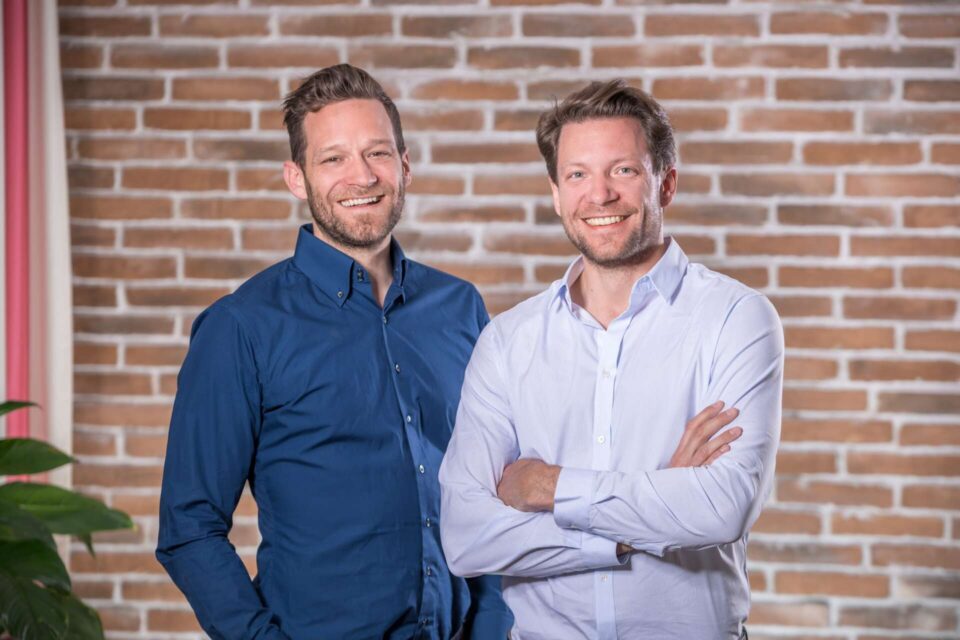
Michael Ploberger and his brother Markus run
Hotel Ploberger in Wels, a seminar and conference hotel in Upper Austria, in the fourth generation.
Both are concerned with the question of how recovery, sleep and awareness
influence the decision-making ability of people with responsibility – and what of this can be put to practical use.
Please do not hesitate to contact us if you have any further questions.
T +43 7242 62 941
[javascript protected email address]